Showing posts with label Wildlife. Show all posts

Friday, November 27, 2015

Tasmania Self Drive Package - 8 Day/7 Night

New 8 Day/7 Night Self Drive Packages for Tasmania!

Wilderness & Beaches…History and Nature Walks…NEW 7 Night Packages ready to go that include accommodations, rental vehicle, entrances to places like Port Arthur, MONA and boat excursions to Wineglass Bay (since you might not want to do the 3 hour hike!). Stay at Cradle Mountain, and finally, take a cruise on the Gordon River. In style. Spend time on Tasmania’s east coast to enjoy the crystal blue waters of Freycinet and spend time at Friendly Beaches.


There are 2 Packages ready to go – first one called Wilderness & Beaches has you arriving at either the Hobart Airport or Launceston Airport (we’ll check your dates to be sure you don’t miss the Hobart Saturday Salamanca Market, if interested). If the wilderness is driving you, then land at Launceston Airport and you’re in position to stay at Cradle Mountain and then move on to Tasmania’s west coast – where ocean beach is a great example of cool temperate beaches – the crashing waves reminds you that you are in the path of the roaring “40’s.”

You’ll walk through the wilderness path in Mt Field National Park and experience the man ferns, huge swamp gums and Russell Falls, one of Australia’s most spectacular wilderness waterfalls….and it’s only 20 minutes from the carpark!


The second package, History and Nature Walks, has more time in Hobart and Port Arthur to study the history of the convicts and get the real story on transportation to all of Australia. The Port Arthur Historic Site has been restored beautifully and is now a major example of how life was for the Convicts in the mid 1800’s. There are loads of walks, especially on the Tasman Peninsula near Port Arthur that will show you some of the most amazing ocean views and cliff top vistas out over the Tasman Sea. The Sydney to Hobart yachts turn around the end of the Tasman Peninsula for the final run up to the finish line in Hobart.
Both Packages include a Wineglass Bay nature cruise with lunch and while at Freycinet, visit a vineyard, a marine farm and Kate’s Berry Farm to check out the local wine and food. Obviously, seafood is at it’s best on Tasmania’s East Coast.

A night is included in Launceston, Tasmania’s major northern city where you can visit the Tamar Valley wineries in their spectacular valley hillside locations. Walks in the Cataract Gorge at Launceston provide a unique experience in local wilderness right in the heart of a major city.

For more information, visit 8 Day 7 Night Packages on www.Tasmania.com

Sunday, November 1, 2015

10 Days in Australia - Splitting Up Your Time

You really want to go to experience all that wonderful wildlife, but you only have 10 days to do it. You can stretch an extra day or two to cover the travel time and give you 10 days on the ground Downunder, but that’s about it.


So…how do you decide where to go, and for how long?  You see the packaged tours and they are usually too long and miss something that you really want to do. Customise your Trip instead.

It is usually a bit rushed to try and spend less than 3 days in a particular location, so saying you want to visit Sydney, the Reef, Tasmania and Kangaroo Island in the 10 day span is pretty counter productive. You will get to know a lot about Australian airports. Remember, Australia is about the same size as the continental U.S.A. Splitting your time up too much results in flitting from point to point without getting to really see it.

Work with a Travel Planner on www.Australian.com.  There are two levels of of trips – Deluxe and Budget. The real difference between the two is the level of the hotel and the offerings of small group trips versus seat in coach day tours. In the deluxe arena, there are private driver/guides for a few 4 Wheel Drive trips to get you away from the coaches. So, you can stay at a lower level hotel, and put the money in going off the beaten track. Or, you can stay in better hotels and take the coach trips.


It is a good idea for a first trip to include Sydney and the Reef – your third place to visit can be decided by whether your interests are in wildlife, cities, wilderness walking or zip lining in the wilderness type activities. The experiences are in different locations and a Travel Planner knows how to mix them in to your final trip so you’ve included everything what you want. This is how you do not waste time unnecessarily.

Wednesday, July 15, 2015

Fly to Australia – Sometimes cheap is not the least expensive.

You’re ready to fly Downunder and you start looking at websites and see some pretty good prices.  The fine print will tell you the date period and you then type in the dates you can actually go, and the price almost doubles.  Ouch.
There is a trick to this, and the answer is routing.  While flights generally fly to Australia from Los Angeles to Sydney, you do have options from and into other cities!  You must be careful grabbing what looks to be the cheapest flight online as you may end up routing through New Zealand or even Korea!  Your time is valuable and you want to land and start seeing those kangaroos as soon as possible.

Have a look on www.Australian.com and click on Air Travel to get some help on how you might fly Downunder.  You can depart from Dallas and even Vancouver BC if you live in the northwest U.S, and, starting Dec. 15, you can fly into Sydney nonstop from San Francisco!
You need not land into Sydney – you might want to fly into Brisbane and start your trip enjoying the Great Barrier Reef.  You can exit Sydney back to the U.S.  The options are there and if you check out www.Australian.com you will find our fairly quickly if there are air specials and what routing works for you on the dates you wish to travel.
If you’re into Tennis, you can fly directly into Melbourne You can enjoy the Reef on your way out and maybe fly Brisbane back to the U.S.  To customise your Vacation to include Tennis, be sure to visit www.Australian.com and get help from an Aussie Travel Planner.

Monday, July 6, 2015

Australia: Day Tours – Help to know what’s better

Day Tours, Half Day Tours, Multi Day Tours.  Where to start?  And what tour do you choose so you know you are on the ‘better’ tour?
To take the confusion out of choosing Tours, get a large piece of paper and write out each area, such as Sydney, Cairns Barrier Reef, Melbourne, Kangaroo Island, for instance.
If you have 3 days in Sydney, block in a Half Day Tour on arrival.  How about a Sydney Harbour Cruise?   On Day 2, write in a morning Bridge Climb Tour of the Sydney Harbour Bridge.  In the afternoon on Day 2, write in a Sydney Sailing Trip.  On Day 3, choose from the Blue Mountains or Bondi Beach. 
You now have Sydney ready to go.  Go to www.Australian.com and click on Tours and you’ll see Sydney.  You can now choose your tours, book online, and you’re in great shape!
Repeat this for Cairns Barrier Reef.  Be sure to include the Full Day Tour on a Reef Trip, and book easily online a Half Day Hot Air Balloon, or Rafting on the Tully River.
Multi Day Tours are available on the Reef in the Whitsundays.  You can sleep onboard a sailing boat and have the most time to snorkel and dive.  Even if you do not wish to get in the water, the cruises are available with glass bottom boats and ample beach time to just relax.
Daintree Rainforest
Full Day trips to the Daintree Rainforest from Cairns are a must and you should always book this ahead online at www.Australian.com    Easy to book, immediate confirmation, and at the best prices.
Kangaroo Island has a few options and you will fly into Adelaide before flying on to K.I. as the locals call it.  Your best option is to not self drive on Kangaroo Island and to join any one of the Day Trips that you can book online at www.Australian.com. The 4 Wheel Drive guides will pick you up at your hotel, and drop you back after seeing all of the wildlife in the wild.

Saturday, June 20, 2015

Australian Wildlife in the Wild. What’s not to like?

No matter where you go in Australia, it’s possible to see wildlife in the wild. Not in the big cities mind you, though a crocodile came up out of the drains in Cairns one time to give the tourists (and a few locals) a bit of a scare.  A bit too close to wildlife in the wild!
You can book tours online at Australian.com.  Any of the full day tours out of the city will show you some sort of wildlife in the wild.
What you see in various locations around Australia will depend a bit on where you are.  Kangaroos are just about everywhere and if you are self driving for any part of your trip, then you will likely spend some of your time avoiding hitting them on the roads.  As an aside, what is referred to as a “bull bar” on the front of the truck or SUV in the U.S. and Europe, is called a “Roo Bar” in Australia.

While a kangaroo is not quite as large as a cow,  the damage in being hit by a 350 pound (175 Kg) kangaroo in full flight is a matter of the speed in which it is traveling.  Kangaroos can make a good 30mph when pushed and if they are panicked into crossing the road, can make a heck of a mess in front of the car.  Hence, the term “Roo Bar.”
There are many other forms of wildlife you can see in the wild though since most wildlife is nocturnal, you are most likely to see them at sunrise and sundown.
The smaller animals such as the echidna (ant eater) wallabies, and in Tasmania, Tasmanian Devils, are often candidates for road kill after dark.
Any of the good wildlife tours, say to the Blue Mountains outside Sydney, or the Atherton Tableland behind Cairns, will show you kangaroos, crocodiles and if you’re lucky,  a cassowary or emu (large flightless bird that resemble the ostrich).
If you miss the chance to see wildlife in the wild, book tours on Australian.com to include the wildlife parks in Melbourne, Sydney, Tasmania, Brisbane and Cairns.

Tuesday, February 3, 2015

Where to see the Tasmanian Devil

Where to See the Tasmanian Devil

Sarcophilus harrisii

The Tasmanian Devil is a nocturnal scavenger only found in the wild in Tasmania. Usually coming out at night,  it is difficult to see in the wild.

Where to see the Tasmanian Devil

There are a number of stories about how it got its name and ferocious reputation. When I was a lad growing up and camping out in the Tassie bush, we would often be woken in the middle of the night by an incredible howling and hissing. We never found the source of the noise, but were told it was Tasmanian Devils fighting over food.
The first settlers in Tasmania in the early 1800s heard the same sounds in the night. It is said they were more creative and said there was a “Devil in the bush”.
The Devil eats dead animal carcasses – it rarely kills for itself – and is almost entirely a meat eater, crunching up the bones and leaving almost nothing but hooves and horns. It really is “Nature’s dead animal vacuum cleaner”.
So, if they are hard to find, how do you find where to see the Tasmanian Devil, alive and kicking? The best place to see the Tasmanian Devil live and up close is in one of the excellent Animal parks in Tasmania.
Tasmanian Devil Conservation Park – Taranna, Tasman Peninsula.
One of the best in Tasmania. Situated on the Tasman Peninsula near Port Arthur.
Tasmanian Devil Conservation Park
Full-Day Tasman Peninsula Tour from Hobart (Includes Devil Park)
Bonorong Wildlife Sanctuary – Near Hobart
Where to see the Tasmanian Devil
Just north of Hobart, Bonorong Wildlife Sanctuary has an interactive Tasmanian Devil Pen.
It also features a great Koala display and wallabies, kangaroos and emus in an open range environment.
Hand feed the local wildlife. Make sure to be there for the presentation by the resident wildlife expert
Bonorong Wildlife Sanctuary
Bonorong Wildlife Park, Derwent River Cruise and Cadbury Chocolate Factory Tour from Hobart
Trowunna Wildlife Park – Mole Creek – Near Deloraine
About 30 minutes drive to the west of Launceston. You can stop in either coming or going to Cradle Mountain.
Trowunna Wildlife Park
Devils@Cradle – Wildlife Park at Cradle Mountain
The Tasmanian Devil Sanctuary at Cradle Mountain. Guided, interactive tours.
DevilsatCradle
East Coast Natureworld – Bicheno
Tasmanian Devils and a particularly good Bird Display.150 acres of natural parklands and lagoons.
East Coast Natureworld

While this list is not everywhere you can see the Tasmanian Devil, the places I have mentioned offer a quality experience and are located near places you will probably be visiting while in Tassie.
More Information: > Tasmanian Devil – Wikipedia

Wednesday, July 30, 2014

Tropical North Queensland

If you live in the Southern Hemisphere, do you feel that the winter temperatures are getting you...down? (pun intended :-) )  Take the edge off the cold by reading this post about Cairns and its tropical delights.  


In June of 1770, Captain James Cook and his crew were exploring the Australian coastline, and the Great Barrier Reef about 110 Kms (65 mi) to the north of where Cairns is today.  They turned seawards into what they thought was deeper water to avoid a large point of land. Bam!  They ran aground on the Endeavour Reef,  having just discovered it by punching a hole in the bottom of their boat.  They named it Endeavour Reef after their unfortunate ship -  It really ruined their day!  They managed to stay afloat and headed for shore to beach the Endeavour for repairs.  It took a while, but they fixed the hole, then sailed on. They named the cape that caused the whole incident Cape Tribulation.

Cape Tribulation
Cape Tribulation is at the northern end of the Daintree Rainforest.  The dark green of the rainforest runs straight into the blue of the Coral Sea. The Daintree Rainforest stretches from Mossman Gorge to Cape Tribulation. Check it out on the map.  It is a place of steep mountains, deep gorges, high rainfall, flood prone rivers, and incredible plant and animal bio-diversity. Walking along the nature trails is like being in a huge, leafy, green cathedral.  Moist air, everything drippy and wet, tall trees, jungle vines trailing, and a carpet of dead leaves and twigs.

Daintree Rainforest
The plant species in the Daintree are very ancient. They include types of ferns and trees that date back before the dinosaurs, up to 135 million years ago. The Daintree is home to 30% of the reptile, frog and marsupial species in Australia, 18% of the birds (over 400 species), 65% of the bats and butterflies and over 12,000 types of insects.  And all of this bio-diversity is crammed into an area under 1% of Australia. Now this is the place to go bird, bat and nature watching!


When Captain Cook ran aground in 1770, you can be sure the local Kuku Yulanji Aboriginal tribe who had been living in the Daintree River area for over 9,000 years knew about it.  They would also have seen the white man rush for gold in the 1870's as the Daintree Village was founded to supply the miners.  One of their descendants, Juan Williams, runs  Walkabout Cultural Adventures out of Daintree - his tours are worth checking out for an authentic experience. Another Aboriginal Cultural Daintree Rainforest Tour leaves Cairns and Port Douglas also.

As an alternative, to really discover the Daintree on your own, rent a car, then stay a few nights in the Daintree Village area and get to meet some of the locals.

Cheers,
Matt


Friday, November 1, 2013

Summertime in Queensland

As Summer starts to heat up in Australia, I wanted to share one of my more popular articles again, as it's the perfect place for a hot, summer weekend (or longer!)

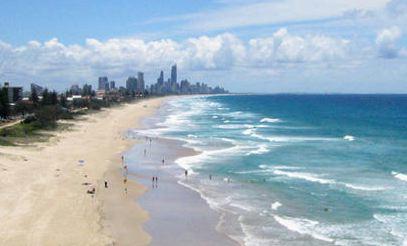
The Gold Coast.  Does that phrase conjure up an image for you?  Do you imagine a golden sunset over the ocean, or a gold-tinged sunrise glinting off the water and making the sand sparkle?  I have been lucky enough to witness both scenes, on many different occasions.
  
Located in southeast Queensland, the Gold Coast is just 80 km (50 miles) southeast of the capital, Brisbane, on a newly upgraded/expanded highway, making the drive a breeze.  Alternately, you can also fly in to the Coolangatta airport which is more conveniently located, but has less flight options than Brisbane.

Surfer's Paradise is probably the most well known of the beaches in the area, but by no means is it the only one!  With approximately 57 km (35 miles) of coastline, there is plenty of great surfing and swimming to be had.  From a safety perspective, the Gold Coast has Australia's largest professional surf lifesaving service to watch out for you.  Remember, swim between the red and yellow flags (and don't forget the sunscreen).  If a day at the beach doesn't appeal to you, there's always plenty of great shopping, especially jewelry and art.  Pacific Fair Shopping Centre in Broadbeach is a good place to wander and browse the shops, have a bite to eat, or to see a movie.
Surfer's Paradise
There are amusement parks galore, all within a 30 minute drive.  You have Sea World, Dreamworld, Wet'n'Wild, Warner Bros Movie World and the Australian Outback Spectacular.

For those of you who like to commune with nature, I recommend a visit to World Heritage listed Lamington National Park, located in the Gold Coast hinterland.  The beautiful rainforest is a great place to beat the heat, where you can enjoy the waterfalls (over 500 of them) and bird life, or be more adventurous and do a walking trail (more than 150km/93mi - all clearly marked).  This area is one of the most important wildlife refuges in the region and is home to some rare and threatened animals.  You'll also find some plants here that can't be found anywhere else. 

So, let's do a quick rundown.
  • Beach ü
  • Sunshine ü
  • Amusement Parks ü
  • Shopping ü
  • Wildlife ü
  • Rainforest ü
What more could you possibly ask for? 

Sunday, July 21, 2013

Perth

Perth, the capital of Western Australia, is the fourth most populous city in the country.  It is an oasis of green between the jewelled blue tones of the Indian and Southern Oceans and the reds and browns of the desert and plains.

Speaking of a green oasis, Kings Park is the world's largest inner-city park - even bigger than famous Central Park in New York City!  At just over 4 square kilometers and located next to the Perth CBD, there's no reason to get that 'enclosed big city' feeling.

Perth
One of the most important things to keep in mind when planning a trip that includes a visit to Perth is the relative isolation.  You will need to pay attention to the distances and travel times between points of interest.  Perth is actually closer to Singapore than it is to Sydney!  Click on the link to get a better idea of the general area, not just the city surrounds.

A must-see destination is Rottnest Island, located just off the coast from Fremantle.  It's a major tourist attraction, so you'll definitely want to book your hotel in advance.  You'll probably hear the locals refer to it as 'Rotto'.  You know us Aussies, we love to shorten the names for everything!  The best way to get there is by ferry from either Fremantle or Perth.  There's plenty to keep you busy on the island.  It's one of the few areas where you can find a quokka.  For those not in the know, a quokka is a small, mostly nocturnal marsupial.  It looks like a cross between a wallaby and a rat (which is how the island got its name - it means Rat Nest in Dutch).

Quokka
Diving is another reason to visit the island and there's even a snorkel trail to follow at Parker Point.  I highly recommend a glass bottom boat tour to see some of the shipwrecks in the area.  Cycling enthusiasts will also love this place, as that is the most common mode of transport (there are no hire cars on the island).

Back on the mainland, wine connoisseurs will want to travel southwest to the Margaret River wine region.  You won't be disappointed by the coastal scenery on the way.  There are plenty of hotels in Margaret River so that you can spend a few days enjoying the vineyards and surrounds.

Margaret River Vineyard
Have a look at the Perth Activities and Tours page on our website to get more details on different types of full day and multi-day trips that are available.

If you have the time, continue southeast to Albany, a historic port city surrounded by national park lands.  From here you are truly looking towards the bottom of the earth, as there's nothing between you and Antarctica.

There are a lot of other places to see if using Perth as your 'jumping off point' so to speak, but I'll cover those in another post.

I hope you get a chance to discover this great, isolated gem of a destination.


Saturday, June 8, 2013

Darwin

Darwin, capital city of the Northern Territory, is the smallest of all Australian capitals.  With a population of approximately 130, 000 (which is half of the entire Territory) it has had considerable growth in the last couple of years.  Situated on the Timor Sea, you can see from the map that it is surrounded by water on three sides.  You'll sometimes hear Aussies refer to this area as the 'Top End'.
City of Darwin
Now is the best time to visit Darwin, during the dry season, which typically runs from about April to October.  The wet season brings some spectacular lightning shows along with cyclones and monsoon rains.  Keep this in mind when planning your travels as you can expect up to 420 mm (approximately 16 inches) in a single month!  Of course, these rains are essential to keep the Kakadu wetlands teeming with wildlife.

Darwin is a major access point for Kakadu National Park and Litchfield National Park.  You have lots of different options of day tours, overnight tours or multi-day tours of both of these areas from Darwin.  Have a look at our Darwin activities and tours page to give you some specifics and plenty of links to book your travel plans.

When you're looking for Darwin hotels to book, you've got quite a few choices.  If you're going to incorporate Kakadu into your plans (and why wouldn't you??) then I suggest staying right in the heart of it - in Jabiru (about 250 km [150 miles] from Darwin).  Click on the map link to get an overview of the area.  Are you one of those people who think that pretty much all Holiday Inns look the same?  Think again!!  The picture below is the Gagudju Crocodile Holiday Inn.  Obviously you don't get the same perspective from the ground, but I think the aerial view is pretty cool.

Gagudju Crocodile Hotel
The Northern Territory in general is rich with Aboriginal history and culture.  Consider a visit to the Tiwi Islands just north of Darwin to submerse yourself in culture and indigenous artwork.  There are many festivals, markets and events throughout the year, including the Darwin beer can regatta in August.  Aussies do love their grog!  For the history buffs, a visit to the Northern Territory Museum and Art Gallery is in order for a multi-media display on the WWII Darwin air raids.

Aboriginal Art Work in Kakadu
Whilst you're in the neighbourhood of Darwin, it's not far to hop a flight down to Uluru Ayers Rock to visit one of the most recognizable Aussie icons.  I'll save that for another post.  Stay tuned!


Sunday, May 19, 2013

Kangaroo Island

Kangaroo Island, once part of mainland Australia thousands of years ago, is now the third largest island, although that fact is a bit deceptive when you look on a map.  Considered part of South Australia, it is located approximately 113 km (70 miles) south west of the capital city, Adelaide.  Although I briefly mentioned Kangaroo Island in a previous post, it's a destination that deserves its own story.

Kangaroo on Kangaroo Island
This is a great place to holiday for many different reasons.  One of the biggest draw-cards is the wildlife.  It was given its name by British explorer, Matthew Flinders, for the Western grey kangaroo.  You'll see an abundance of kangaroos and wallabies over most of the island.  Sea lions and seals can be seen in great numbers around Seal Bay and Admiral's Arch.

Sea Lions on Kangaroo Island
You've got a good chance of seeing koalas (who doesn't love that?), goannas (big lizards), possums and plenty of species of birds.  The best way to see some of the wildlife in their natural habitat is to get out of your car and hoof it (walk) around the island's many national parks and conservation areas.  At least a quarter of the island is conserved, allowing the wildlife to flourish.  Just remember not to feed your picnic scraps to the animals, as you'll do more harm than good regardless of your intention.

To see some great wildlife and scenery photos check out this previous post that has a Smilebox dedicated to Kangaroo Island.

Below is a sight you may recognize - the Cape Willoughby lighthouse, located on the eastern tip of the island, closest to Cape Jervis and the first lighthouse built in South Australia.
Cape Willoughby Lighthouse
There's more than just beautiful scenery and unique wildlife to capture your imagination though.  For alternate activities you can consider a number of art galleries, lavender farms, a Eucalyptus distillery, go scuba diving or watch a shearing demonstration.  Rich in history, there are a number of museums to peruse where you might even learn a thing or two.

If you're planning to visit, you have 2 options - see Kangaroo Island in a day tour from Adelaide or stay in a hotel on the island.  Either way, Australian.com can help you out.  To get across to the island you can fly or take a ferry.  Due to the size and popularity, this is one destination that I'd definitely recommend making advance bookings.

We hope to see you there soon!


Sunday, January 20, 2013

Cairns - Hot Air Ballooning - A First Timer's Journey

When the Montgolfier brothers made the first manned, 20 minute hot air balloon flight in Paris in 1783, they were two months behind an earlier, unmanned French flight carrying a sheep, a rooster and a duck. The earlier flight crashed, killing all on board.  The Montgolfiers landed safely.

While Joseph and Etienne Montgolfier saw Paris from the air, they could not have imagined the sun rising out of the Coral Sea in Far North Queensland, nor watching kangaroos jumping in the Australian bush.


Hot Air Ballooning has thrived since that first manned flight, and modern materials and technology have made it possible for hot air to carry people as high as 68,986 feet (21,027 metres). The longest flight is 320 hours and 33 minutes.

While there is plenty of hot air in the world - particularly in the political arena - and using it for flight is a great way to experience the still of early morning.

The Atherton Tableland is an escarpment that runs parallel to the coast behind Cairns, and it provides excellent conditions for hot air ballooning. The Tableland is a northern part of the Great Dividing Range, the inland range that runs all the way up the East Coast of Australia. Near Cairns it varies in height from 1,600 to 4,200 feet (500 - 1,280 metres). The height tempers the tropical climate of the coast. 

Atherton Tableland

First explored in 1875, it was settled by John Atherton - the town of Atherton bears his name - when he discovered tin and gold in 1877. The Chinese who came to the area to work on the goldfields created what was the largest Chinatown in Australia by 1900, and they pioneered the agricultural industry.  Little remains of the Chinese influence, though it can be seen at the recently restored Hou Wang Temple near Atherton. Today, the crops grown are sugar cane, mangoes, peanuts, avocados and macadamia nuts. Beef and dairy cattle are also raised.


So, let's take a hot air balloon ride. You will be picked up at your hotel well before sunrise, and by the time the sun climbs out of the Coral Sea on the Eastern horizon, you will be high in the air. Kangaroos graze mainly at sunrise and sunset. As the sun rises, it shines almost parallel to the ground, throwing a giant shadow of a jumping 'roo over the landscape. It can only be seen from the air with the right conditions.  If you are lucky - and most are - this will be one of your great memories of Australia.

Cheers,
Matt


Saturday, December 29, 2012

Cairns - The Daintree Tropical Rainforest - A First Timer's Journey


In June of 1770, Captain James Cook and his crew were exploring the Australian coastline, and the Great Barrier Reef about 110 Kms (65 mi) to the north of where Cairns is today.  They turned seawards into what they thought was deeper water to avoid a large point of land. Bam!  They ran aground on the Endeavour Reef,  having just discovered it by punching a hole in the bottom of their boat.  They named it Endeavour Reef after their unfortunate ship -  It really ruined their day!  They managed to stay afloat and headed for shore to beach the Endeavour for repairs.  It took a while, but they fixed the hole, then sailed on. They named the cape that caused the whole incident Cape Tribulation.

Cape Tribulation
Cape Tribulation is at the northern end of the Daintree Rainforest.  The dark green of the rainforest runs straight into the blue of the Coral Sea. The Daintree Rainforest stretches from Mossman Gorge to Cape Tribulation. Check it out on the map.  It is a place of steep mountains, deep gorges, high rainfall, flood prone rivers, and incredible plant and animal bio-diversity. Walking along the nature trails is like being in a huge, leafy, green cathedral.  Moist air, everything drippy and wet, tall trees, jungle vines trailing, and a carpet of dead leaves and twigs.

Daintree Rainforest
The plant species in the Daintree are very ancient. They include types of ferns and trees that date back before the dinosaurs, up to 135 million years ago. The Daintree is home to 30% of the reptile, frog and marsupial species in Australia, 18% of the birds (over 400 species), 65% of the bats and butterflies and over 12,000 types of insects.  And all of this bio-diversity is crammed into an area under 1% of Australia. Now this is the place to go bird, bat and nature watching!


When Captain Cook ran aground in 1770, you can be sure the local Kuku Yulanji Aboriginal tribe who had been living in the Daintree River area for over 9,000 years knew about it.  They would also have seen the white man rush for gold in the 1870's as the Daintree Village was founded to supply the miners.  One of their descendants, Juan Williams, runs  Walkabout Cultural Adventures out of Daintree - his tours are worth checking out for an authentic experience. Another Aboriginal Cultural Daintree Rainforest Tour leaves Cairns and Port Douglas also.

As an alternative, to really discover the Daintree on your own, rent a car, then stay a few nights in the Daintree Village area and get to meet some of the locals.

Cheers,
Matt


Sunday, November 11, 2012

Sydney - Walk the Sydney Domain Foreshore - A First Timer's Journey

Today, let's take a walk along the foreshore path between the Sydney Opera House and Mrs Macquarie's Chair.  Get a map of Sydney and look at the area between the Opera House and the next point of land to the east - Macquarie Point.

But, what on earth is Mrs Macquarie's Chair?  Back in 1810, the wife of the Australian Governor, Lachlan Macquarie, used to like sitting out on Macquarie Point near Government House, watching the shipping in Sydney Harbour.  A bit like watching TV today. To make it more comfortable, the Governor got some Convicts to carve a chair out of the solid rock on the point.  Hence the name.  The chair is still there, and it's not any more comfortable today than it must have been then.

Macquarie Point is a great place for getting photos of the Opera House with the arch of the Sydney Harbour Bridge behind it. 

Farm Cove foreshore
Between the Opera House and Mrs Macquarie's Chair is Farm Cove. There is a great walk around Farm Cove on a foreshore path that takes about an hour return. From the Opera House, follow the foreshore east. Very scenic, great photos.  Not good in the rain, so go on a fine day. 

Leaving Macquarie Point, take the lower path between the foreshore path and Mrs Macquarie's Road and walk northwest back towards the city. You will see the high rise buildings behind the trees. This area is called The Domain, and is a very popular place for picnics, open air concerts and events.
Royal Botanical Gardens
Have a look through the Royal Botanical Gardens. The Gardens are uphill, adjacent to Downtown. You'll see some weird looking "parcels" hanging from the trees, These are Grey Headed Flying Foxes, also known as Fruit Bats - half fox (the front half) and half bat. They're not local, but have moved in and formed a colony in the Gardens.

Fruit Bats hanging from the trees
Flying Fox/Fruit Bat
With a wing span of about 1 meter (3 feet), they are grotesque. If disturbed, and near sunset, they make an unbelievable noise. They have been destroying a lot of the trees in the Gardens and the authorities are trying to remove them  Good luck with that!

After checking out the Flying Foxes and the Gardens, cross onto Macquarie Street, and walk back downhill to the Opera House.


Next Post we will head off to Bondi Beach on the Hop-on, Hop-off bus. Stay tuned.

Travel Guard - The Best Travel Insurance